ServicesWhole-Home Filtration
Whole-Home Filtration in Friendswood
We install whole-home filters where your water enters the house, so every shower, sink and ice maker gets cleaner water. We size each system to your home's real flow, then plumb it so filter changes stay easy for years.
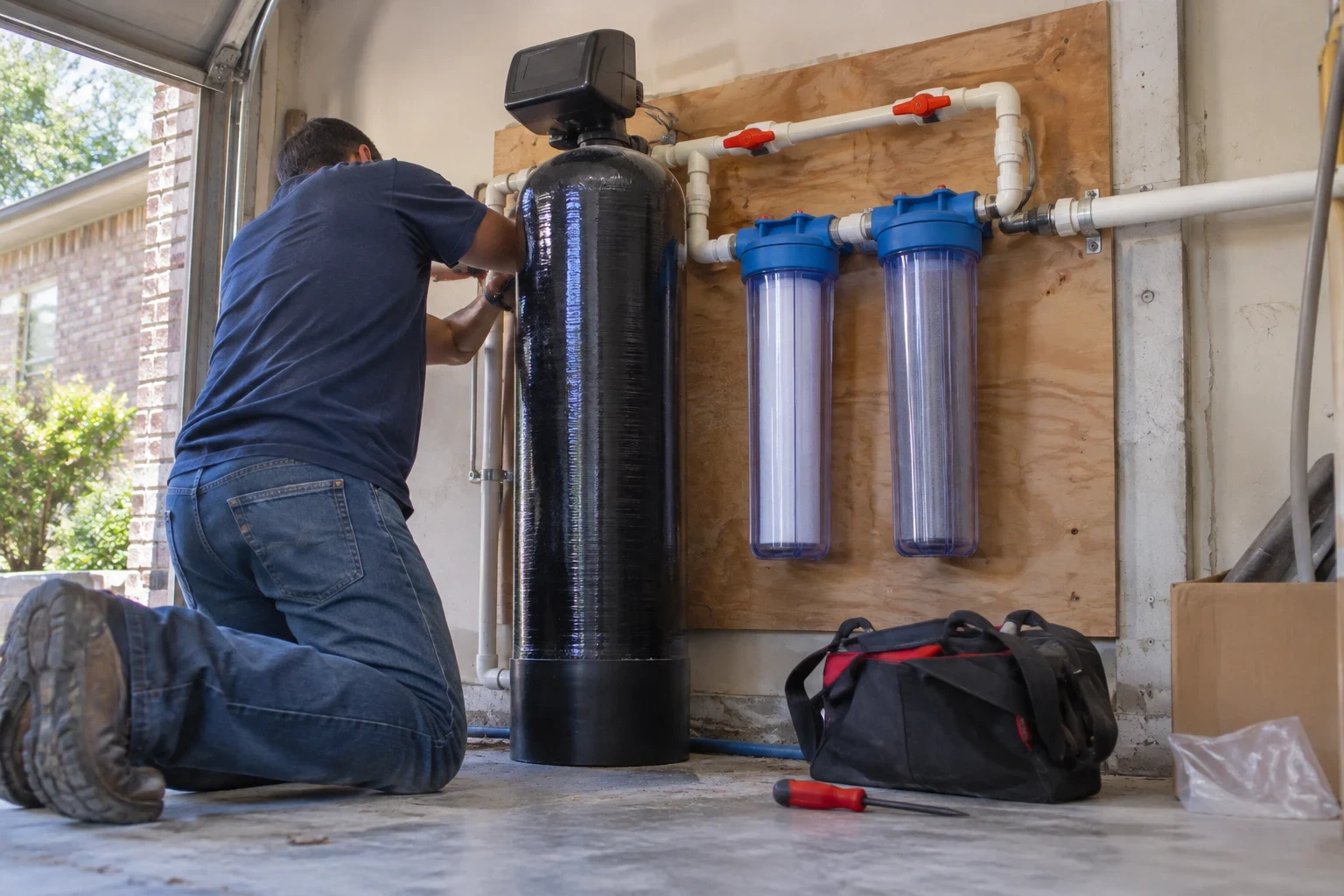
One system that treats every tap
A whole-home system, also known as point-of-entry filtration, is installed on the main supply line right where water comes into your home, ahead of every faucet and appliance. Our usual setup pairs a sediment prefilter with a tank of carbon media. The prefilter traps grit so it never reaches your fixtures, and the carbon pulls out the chlorine or chloramine taste and smell that city water carries.
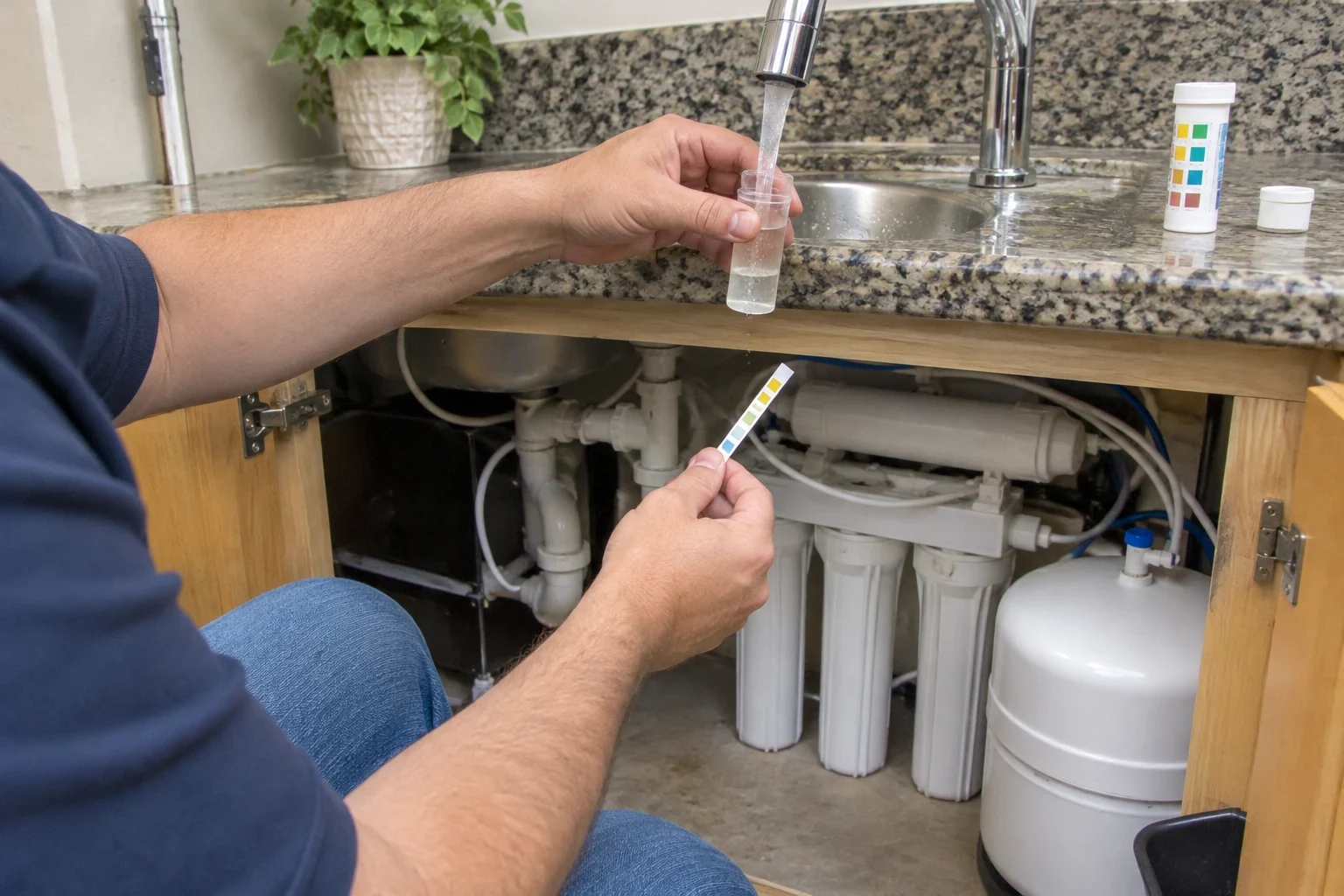
It makes sense when the problem is everywhere at once: a shower that smells like a pool, kitchen water that tastes off and a fridge filter that clogs early. When the glass you drink from is what worries you most, a reverse osmosis unit under the kitchen sink may do more for you, and it pairs nicely with a whole-home filter. If you're fighting scale and spots, carbon won't help, and a water softener is where we'd steer you.
Unsure what your water contains? A water testing visit gives you that answer before you spend anything on equipment.
What goes into a proper installation
- Sizing to your flow
- We count your bathrooms and look at how your family uses water at peak times. An undersized tank drops pressure when two showers run, so we size to the gallons per minute you actually need.
- A bypass valve
- Every system gets a bypass. If you ever need to service the filter, you flip one valve and the house keeps running on unfiltered water.
- Unions and clearance
- We use unions on both sides and leave room around the tank and prefilter housing. A cartridge change should take minutes, not a plumber.
- Grounding jumper
- Many homes use metal water pipe as part of the electrical ground. When we cut into that line, we add a bonding jumper across the system so the ground path stays intact.
- Flushed and checked
- New carbon releases fine dust, so we backflush the media before it goes into service. Then we check for leaks and confirm your pressure at a fixture.
- Help after the sale
- We offer full services after the sale, from prefilter changes to media replacement, so you're never left guessing about upkeep.
Signs your home could use it
Your shower smells like a pool
That's disinfectant from the city supply. It's there for good reason, but carbon removes it before it reaches you.
Grit in aerators and showerheads
Small particles collect in faucet screens and slow the flow. A sediment prefilter stops them at the main line.
Fridge filters wear out fast
If your refrigerator or coffee maker filter clogs well before its rated life, the water coming in is doing more than it should.
You buy bottled water for taste
Plenty of families tell us the water is safe but they just don't like drinking it. Better-tasting water at every tap often ends the case-by-case runs to the store.
What shapes the price
Installation is free, so your cost comes down mostly to the equipment and the parts your plumbing calls for. We go over each piece during the phone call and again once we've seen your setup. That way the final number matches what we talked about.
Tank size
A home with four people and three showers pulls far more water at peak times than a couple in a two-bath house. A larger media tank holds pressure steady under that demand and lets the water spend enough time in the carbon to come out clean.
Carbon grade
Regular activated carbon does a good job on chlorine. If your supply uses chloramine, a catalytic carbon removes it more effectively, and that media is priced higher.
Added stages
Plenty of homes do fine with a sediment prefilter and one carbon tank. When a test turns up something more, an extra stage may be worth adding.
Access to the main line
A main line that's easy to reach keeps install day short. Cramped spots, a reroute or aging pipe that needs fixing first adds fittings and labor.
How your installation goes
- 1
Start with a call
Let us know what's bothering you about your water and how many people share your home. We'll ask how many bathrooms you have, how old the plumbing is and whether your water has ever been tested.
- 2
We see your setup
We locate where the main line enters, often by the garage or along an outside wall, and check the pipe type and the space around it. If a test would help, we'll suggest one before naming a system.
- 3
A straight recommendation
You'll hear which system we'd choose and the reason for it, without jargon. If something smaller or a different service would do the job better, we tell you.
- 4
Install day
We shut off your water briefly to cut in, set the tanks level and fit the bypass and unions. Then we flush the media, inspect every joint and tidy up before heading out.
- 5
Care afterward
Before we go, we show you how the bypass works and when the prefilter needs changing. We're still around for service as the years go by.
Whole-home filtration questions
Will a whole-home filter lower my water pressure?
Not if it's sized right. When people notice a drop, the cause is usually a tank too small for the home's demand. We size each system by the flow your household actually uses, not by picking one standard model.
How often do the filters need changing?
The sediment cartridge typically gets swapped every few months, depending on what your water carries. The carbon bed lasts far longer and is replaced every few years. We'll give you a schedule for your system, and we can do the changes for you.
Does this soften my water too?
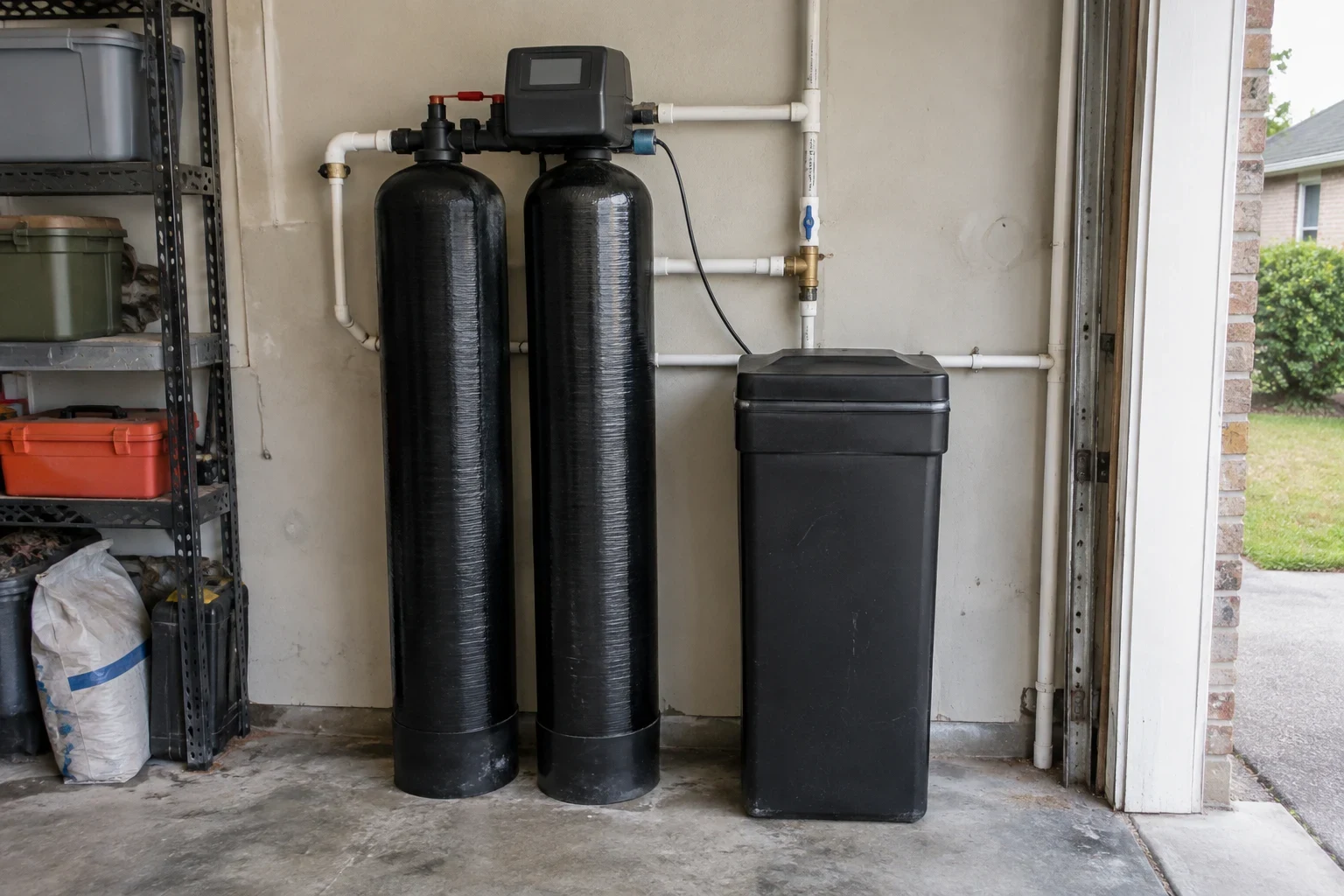
No. Carbon cleans up taste, odor and sediment, but the calcium and magnesium that leave scale pass right through it. If white crust on fixtures or spots on glasses bother you, we'd check your hardness first and only suggest a softener if the numbers call for one.
Do I still need a reverse osmosis system?
Not necessarily. Many households drink straight from the tap once the whole-home filter is in. Some add an under-sink RO unit for drinking and cooking, and the whole-home system upstream helps that unit's filters last longer.
Who will be recommending my system?
The person matching equipment to your water holds the Certified Water Specialist credential from the Water Quality Association. It means the advice you get rests on real knowledge of how treatment systems work, not a sales script.
Ready for better water from every faucet
Tell us what you're noticing and a little about your home. We'll explain what fits and what it takes, and serve homes in Friendswood, Pearland, League City and nearby towns.