ServicesReverse Osmosis
Reverse Osmosis in Friendswood
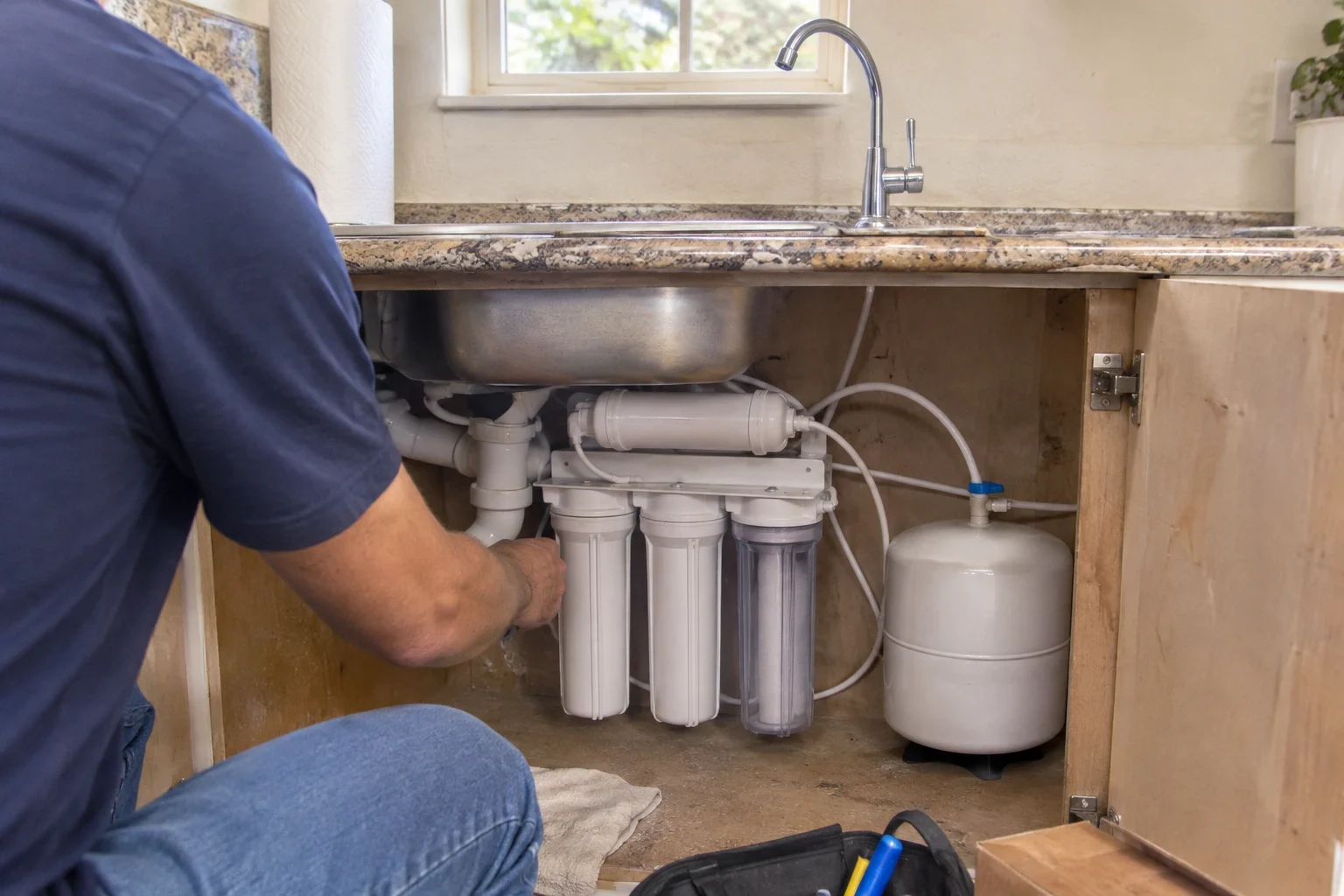
A reverse osmosis system gives your kitchen its own tap of clean, crisp drinking water. We fit it under your sink with tidy tubing, a properly placed drain line and settings checked before we leave, so it keeps working without drips or fuss.
Better drinking water from a faucet of its own
A reverse osmosis system forces water through an extremely fine membrane. That membrane holds back dissolved solids, lead picked up from older plumbing and a long list of trace contaminants. Carbon filters on either side of it handle the chlorine taste and smell. The result is water for your glass, your coffee maker and your cooking pots that tastes clean every time.
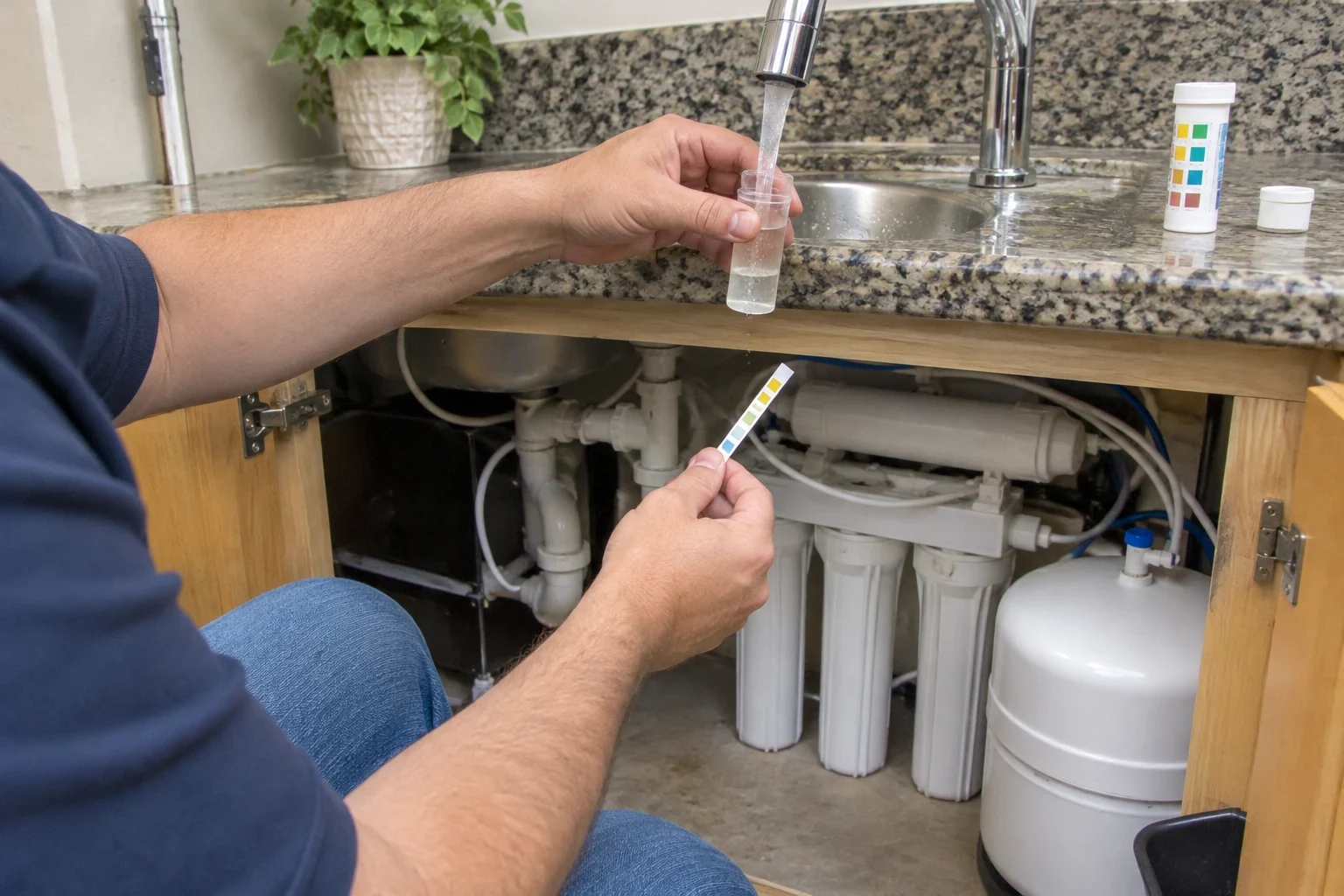
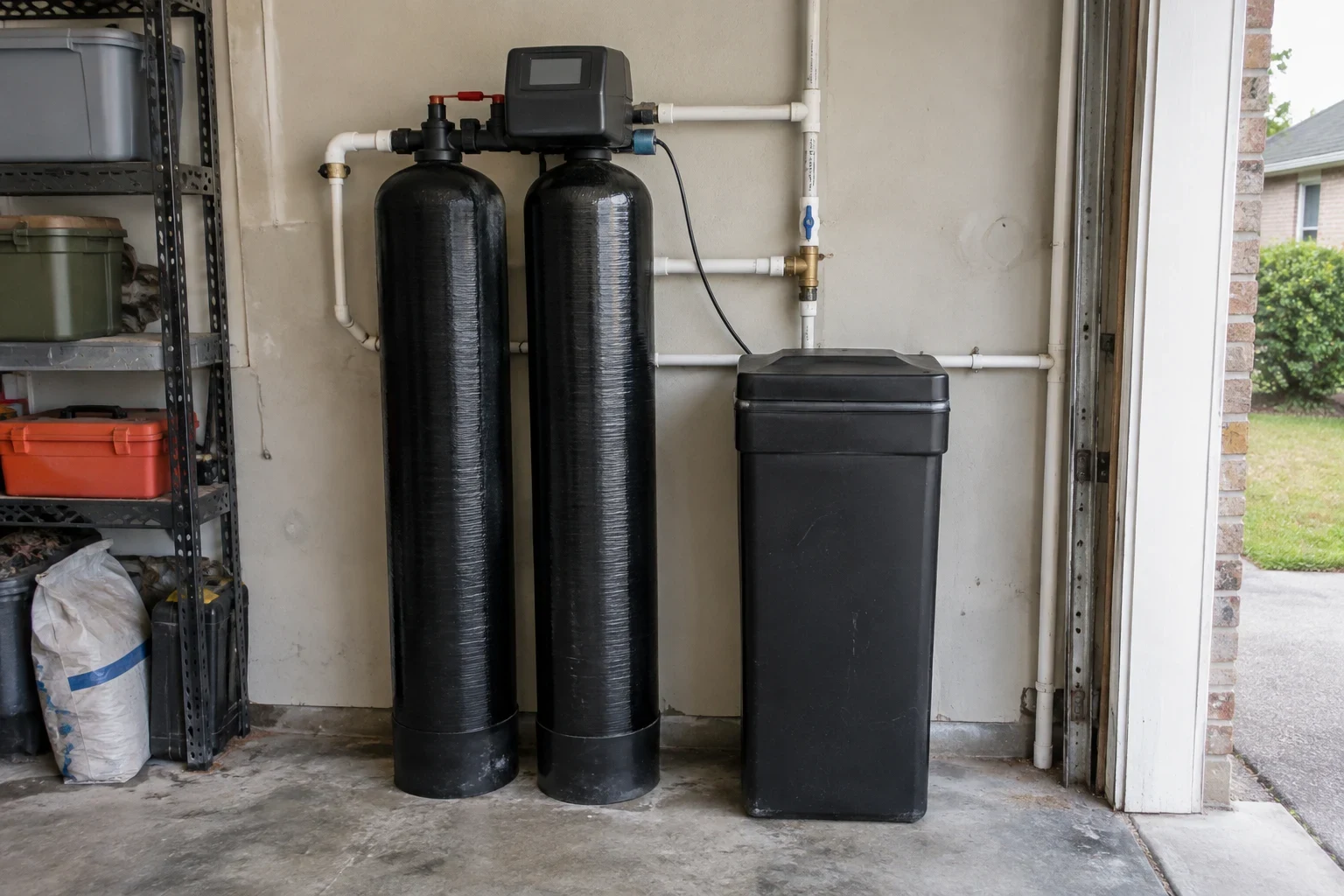
This is a good choice when the water you drink is what worries you most, rather than every faucet and shower in your home. For softer water on fixtures or better water throughout the house, Whole-Home Filtration or Water Softeners can work alongside it. If you are unsure where to start, Water Testing shows what is actually in your water first.
When an RO system acts up, the cause is usually how it was installed. We see drain lines clamped in the wrong place, tubing cut at an angle and storage tanks that never had their pressure set. Getting those small things right is where we put our effort.
What comes with your install
- A check of your sink and water
- We look at the cabinet space, measure your water pressure and trace where the drain goes. An RO membrane needs steady pressure, so if yours is on the low side we say so and discuss a booster or permeate pump.
- Its own drinking faucet
- The faucet goes into a spare hole in your sink, or we drill a clean new opening, using the proper bit for granite or quartz. We tighten it down level so it never wobbles and works the connections loose.
- Drain connection in the right spot
- We attach the drain saddle above the trap and on the correct side of the pipe. Placed badly, it can gurgle or let dirty sink water drift back toward the unit, so we get this part right.
- Clean tubing runs
- Each tube is cut straight, pushed fully into its fitting and routed away from where your hands and storage bins go, so nothing kinks. We leave enough slack to change filters without disconnecting lines.
- Tank set, sanitized and tested
- We set the air charge in the storage tank, sanitize and flush the system, and empty the first full tank so loose carbon dust stays out of your glass. Every joint gets watched under pressure before we leave.
- Fridge or ice maker hookup if you want it
- For RO water at the refrigerator, we add a separate line sized and routed so the kitchen faucet keeps its flow.
When reverse osmosis is worth it
Water that tastes of chlorine
If your tap water smells like a swimming pool, you may already be leaning on bottled water or a pitcher filter that struggles to keep pace.
Original pipes and fittings
Older plumbing can release lead and other metals into water on its way to the faucet. Few options cut lead at the kitchen tap as well as an RO membrane does.
A steady supply of bottled water
Buying and storing cases every week adds up in cost and pantry space. A dedicated faucet ends that chore.
Cloudy ice and spotty glassware
Minerals in the water leave a white film on glasses and make ice cubes murky. With RO water, both come out much clearer.
An existing unit that leaks or slows
A system that drips at the fittings, runs nonstop or barely trickles often needs a fresh membrane or a fixed install. We are glad to check your current setup before recommending anything new.
What sets the price of an RO system
No two kitchens are set up quite the same, so your price comes down to the system you pick and what your sink area needs. We walk through it with you on the phone before anything is installed. Our offers include free installation, and we stay with you with full services after the sale.
How many stages
A standard multi-stage unit suits most kitchens. Adding a remineralization or UV stage means more parts and a higher total.
Your water pressure
When pressure runs low, a booster or permeate pump helps the membrane do its job and sends less water down the drain.
Counter material and faucet style
Granite and quartz take more time and the proper bit to drill cleanly. A specialty faucet finish also moves the number.
Lines to the fridge or ice maker
A second run of tubing adds fittings and labor, especially when the route has to pass through several cabinets.
Filter changes over time
Expect to replace the prefilters roughly every twelve months. The membrane lasts several years, with the exact timing set by how much you use and what is in your water.
What to expect on install day
- 1
A conversation by phone
You let us know what you dislike about your water and how the space under your sink looks. We share what we would suggest and the reasons behind it, without jargon.
- 2
Protect the cabinet and shut off water
We empty the cabinet with you, put down a protective mat and close the cold supply valve. The rest of your kitchen stays in use; only that sink is out for a while.
- 3
Install the components
We mount the filter assembly, faucet, tank and drain fitting, then run the tubing neatly. Most jobs wrap up in a few hours.
- 4
Pressurize, flush and show you around
We bring the system up to pressure, watch for leaks, flush it and point out each filter along with when it will be due. You also learn where to shut the system off, just in case.
Common questions about reverse osmosis
Does an RO system send water down the drain?
Yes, some of it. While the membrane works, a portion of the incoming water rinses away what it rejected and exits through the drain connection. How much depends on the model and on the pressure feeding your home. Efficient newer units and permeate pumps cut that waste a good deal, and we will help you pick the one that suits your kitchen.
Will I lose the minerals in my water?
Reverse osmosis removes most dissolved minerals along with the things you are trying to get rid of. Many people enjoy that clean taste and leave it alone. If you prefer some minerals back in your glass, a remineralization stage adds them, and our Alkaline Water Systems page covers that choice.
How long do the filters last?
Plan on replacing the sediment and carbon prefilters about once a year. The membrane typically lasts several years before it is due. We set the housings where you can reach them, so a change takes minutes, and we will give you a schedule that matches your water.
Who installs the system?
A Certified Water Specialist through the Water Quality Association handles your install. That training covers how the membrane, the carbon stages and your water pressure affect each other, and you can see it in how neatly the system is set up under your sink.
Can my refrigerator get RO water too?
Most kitchens can do it. We run a dedicated line from the system to the fridge or ice maker, then check that the drinking faucet still fills a glass at a good pace.
Let's sort out your drinking water
Give us a quick rundown of what you notice in your water and how your sink cabinet is laid out. We will tell you which system makes sense and exactly how we would fit it. We serve Friendswood and neighbors in Pearland and League City.