ServicesWater Softeners
Water Softeners in Friendswood
A water softener removes the calcium and magnesium that leave spots on glasses, crust on faucets and scale inside your water heater. We test your water first, size the system to your home, and set up the drain, bypass and settings so it runs quietly for years.
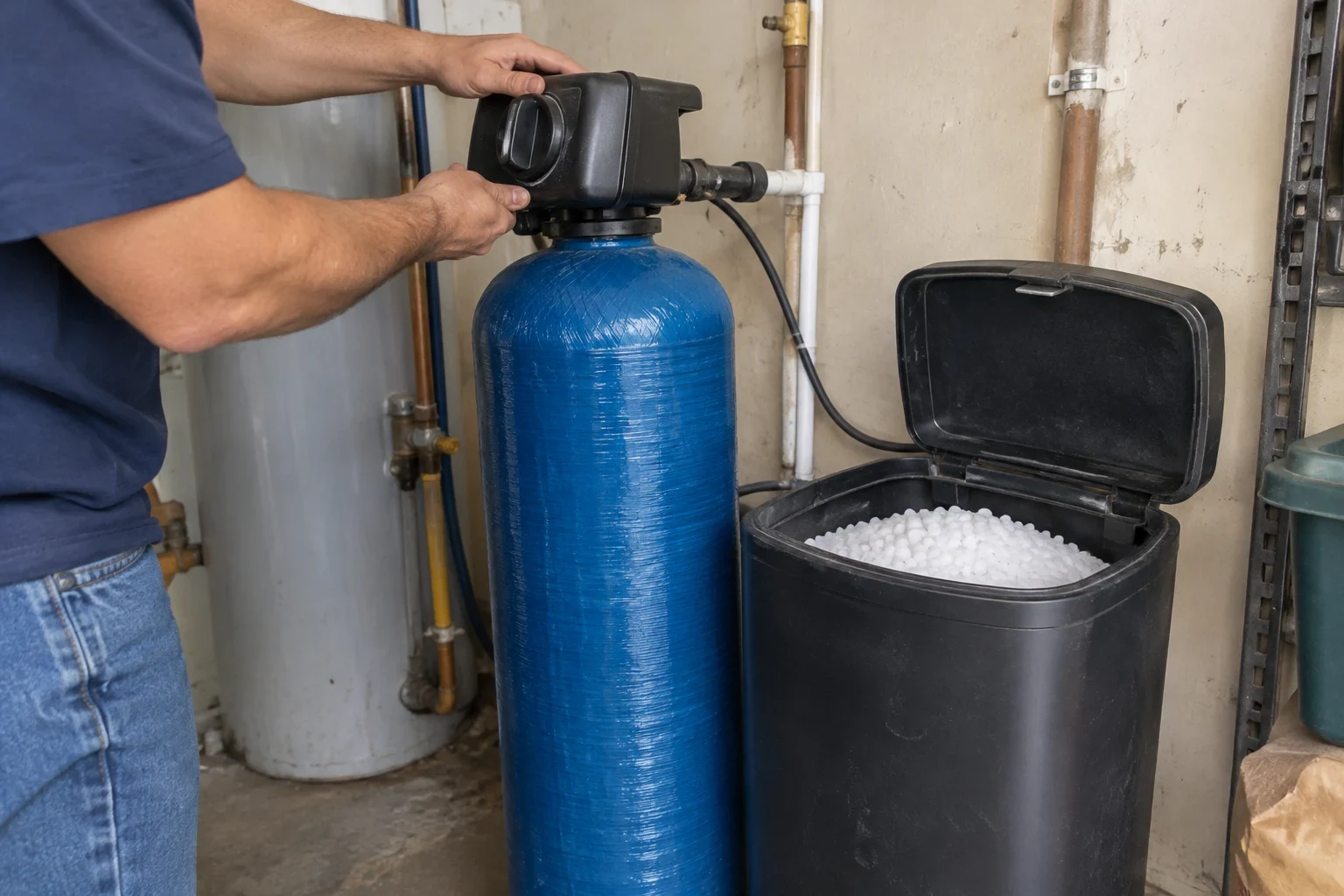
When a softener is the right call
How hard your water is depends on where it comes from and what it passes through on the way to your faucet, so it can change from one house to the next. We begin with a hardness reading at your own tap rather than a pitch. If the result comes back soft or only mildly hard, we will say plainly that a softener would not pay off, and suggest an option that suits your water better, such as whole-home filtration for chlorine taste and odor.
When the test does show hard water, a softener protects things you already paid for: the water heater, dishwasher, washing machine and shower glass. Our team includes a Certified Water Specialist recognized by the Water Quality Association, and that training shows up in the parts of the job most people never look at twice.
Installation is free, and we stay with you after the sale for service, salt questions and adjustments.
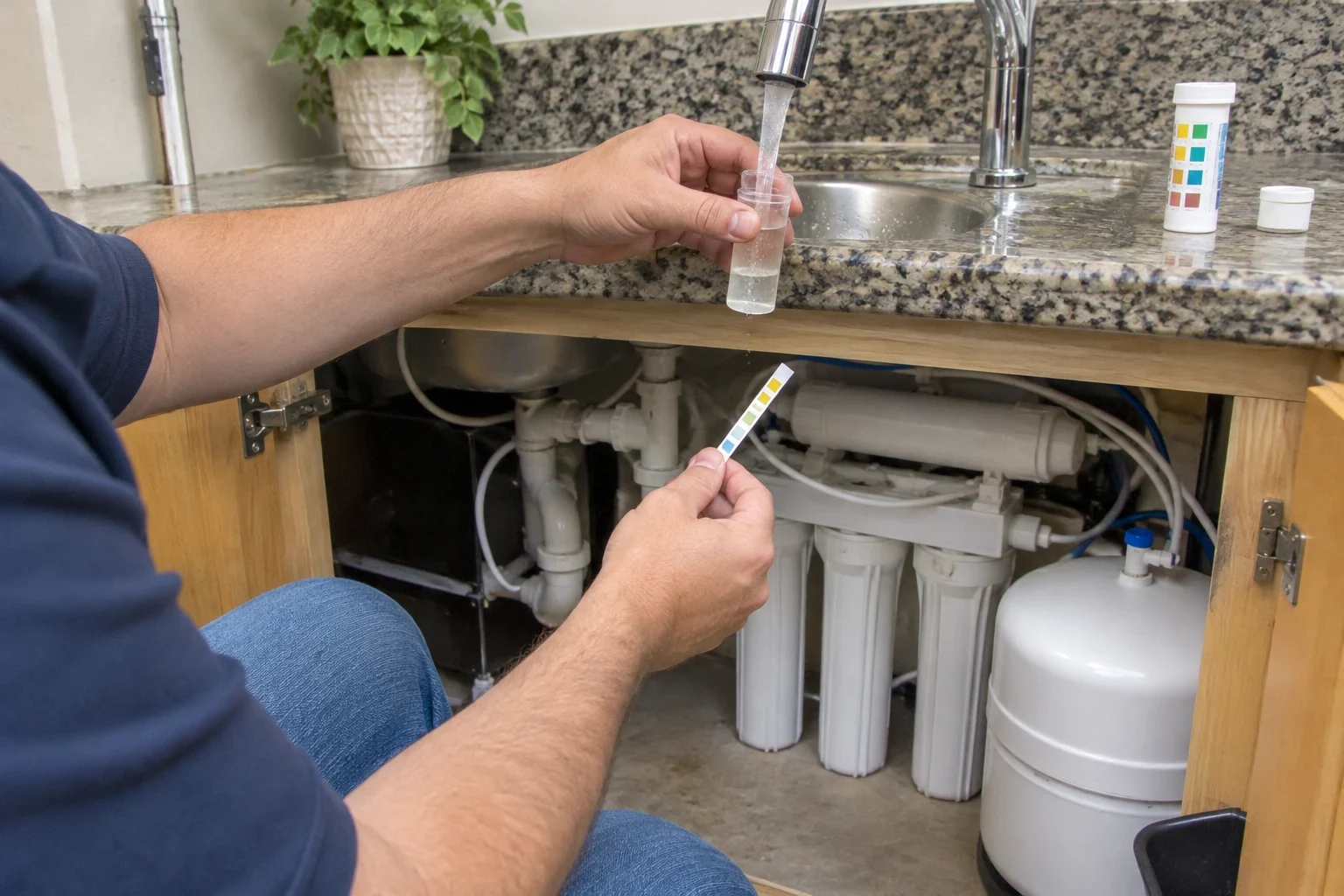
What goes into a softener install done properly
- 01
Hardness and iron test
We measure hardness and check for iron before choosing a system. Iron can foul softener resin, so knowing it is there changes how we set things up.
- 02
Sizing to your household
Grain capacity is matched to your hardness and the number of people in your home. An undersized tank regenerates too often and burns through salt. An oversized one lets resin sit too long between cycles.
- 03
Bypass valve and supported fittings
Every install gets a bypass valve so you can take the softener offline without shutting off water to the house. We use fittings suited to your pipe material and support the lines so the valve head never carries their weight.
- 04
Drain line with an air gap
The regeneration drain runs to an approved spot with a proper air gap, so wastewater cannot siphon back toward the system. We fasten the line so it stays put during a backwash.
- 05
Level brine tank and overflow
The brine tank sits on a solid, level base, and we connect the overflow line where your setup allows. A stuck float then means a quick fix, not a puddle on the garage floor.
- 06
Programmed and leak checked
We enter your hardness, regeneration time and reserve, run a manual cycle, and check every joint for drips before we pack up.
Questions about Water Softeners?
Call(281) 694-0589Signs hard water is wearing on your home
White crust on faucets
Chalky buildup around faucets, showerheads and the base of fixtures is mineral scale. Wiping it off only lasts until the next week.
Spotted dishes and shower glass
Glasses come out of the dishwasher cloudy, and the shower door clouds over a few days after you clean it.
A rumbling water heater
Scale settles in the bottom of the tank. Popping or rumbling as the heater runs is often that layer, and it makes the heater work harder.
Soap that will not lather
Minerals in the water tie up soap before it can foam, so the shampoo and detergent bottles empty faster and your skin and hair still feel coated. Towels and clothes may come out of the wash stiff, with colors looking tired.
An old softener that stopped keeping up
If your current unit uses salt but spots keep coming back, the resin, valve or settings may be the problem. We can test and give you an honest answer on repair versus replacement.
How a softener job runs
- 1
A phone conversation, then a test
We start by hearing what you are noticing, then test your water at the tap. You see the actual numbers and get a plain recommendation, even when the honest answer is that you do not need a softener.
- 2
Choosing the spot
Softeners usually go in the garage near where the main line enters your home, or beside the water heater. We look for drain access, an outlet for the valve head and enough room to pour in salt without a struggle.
- 3
Installation
We shut off the water, cut in the bypass and connections, run the drain and overflow lines and fill the brine tank. We cover the floor where we work, and most installs take part of a day.
- 4
Startup and walkthrough
We flush the system, program it to your test results and show you how to use the bypass, check the salt level and read the display. Packaging and any old equipment leave with us.
What shapes the cost of a softener
Installation is free, so your cost comes down to the equipment and what your plumbing needs to receive it. We walk through each line of the estimate before you decide, and you can get your quote by phone once we have your test results in hand.
- Your test results and daily water use
- A high mineral reading, paired with a busy home running showers, laundry and the dishwasher every day, calls for more grain capacity between recharges. Meeting that need usually takes a larger resin tank, which raises the equipment price.
- How the valve decides to regenerate
- Some valves track the gallons your household actually uses and only recharge when the resin needs it, which keeps salt use down over the years. Others run on a set calendar regardless of use. Those are cheaper to buy but less careful with salt.
- Plumbing at the install spot
- Some homes have a softener loop and a drain right where the unit goes. Others need extra pipe run to reach the main line or a drain, which adds material and time.
- Iron or other findings
- If testing shows iron or another issue, you may need a pre-filter or a different setup so the softener resin lasts.
Water softener questions we hear
Does my Friendswood home actually need a softener?
It depends on your water source and your plumbing, and hardness can differ from one home to the next. Some homes are on city water and others on private wells. We test before recommending anything, and if your water is not hard enough to justify a softener, we will tell you.
Will softened water taste salty?
Softened water carries a small amount of sodium, and most people do not notice it. If you would rather keep it out of your drinking water, an under-sink reverse osmosis system removes most of it. Many households pair the two.
How often will I need to add salt?
There is no single schedule. A family with very hard water and heavy daily use will go through salt faster than a couple with milder water, and a larger tank holds more between refills. A monthly peek into the brine tank is a good habit for most people. We tune the regeneration settings so salt is not wasted and show you the fill line to keep.
Is a softener the same as a whole-house filter?
No. A softener removes hardness minerals but does little for chlorine taste or odor. Whole-home filtration handles that. Some homes need both, and we will explain which goes first in the line and why.
What if I am on a private well?
Well water often carries iron or other minerals that call for treatment before the softener. We test for those first, and our well water treatment service can be designed to work alongside a softener.
What happens after the install?
We offer full services after the sale. That covers setting adjustments, resin cleaning, valve service and answers when something looks off. Reach us by phone at the same number you used to set up the install.
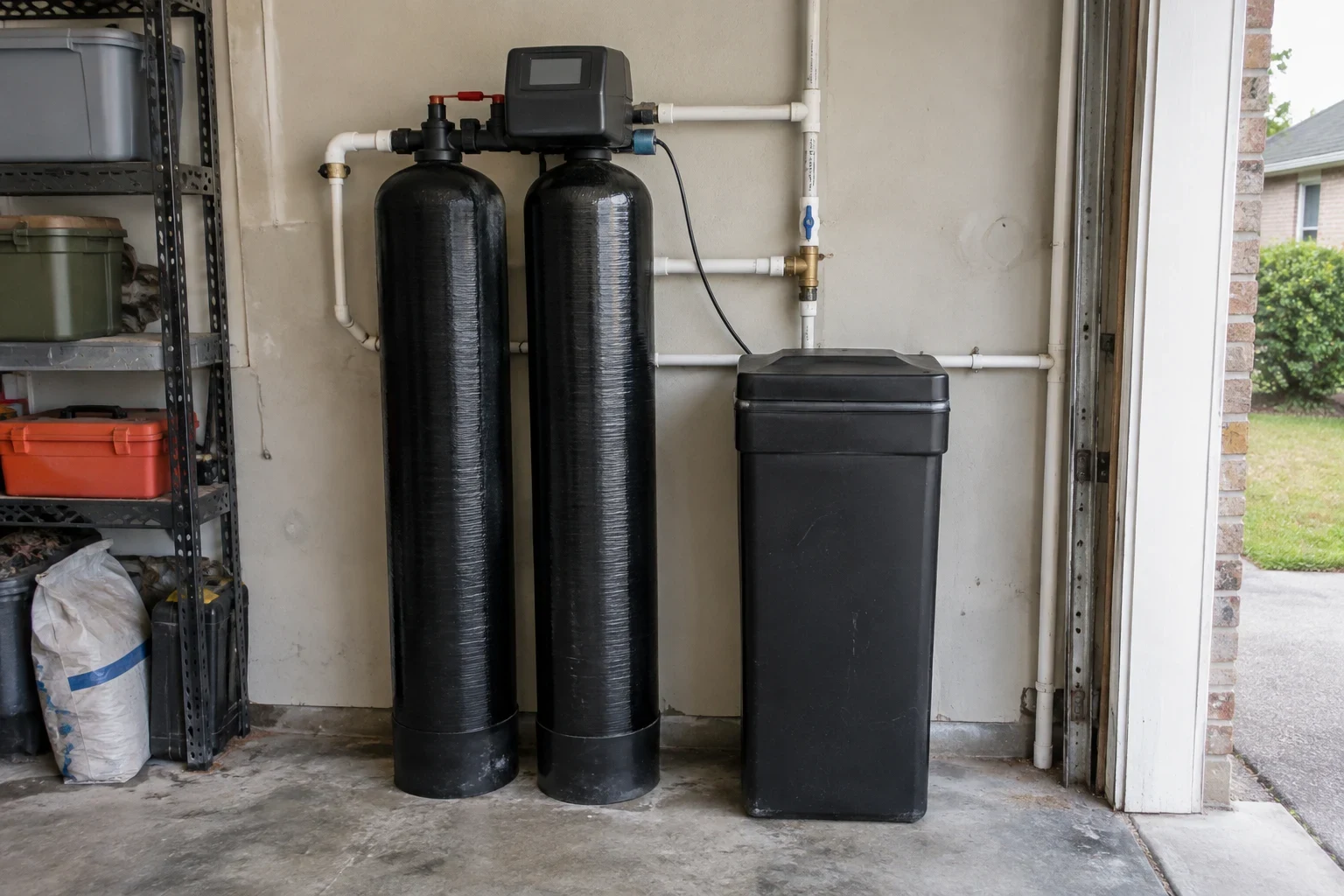
Find out what your water really needs
Tell us what you are seeing around your home, and we will plan a hardness test and talk through whether a softener makes sense.