ServicesWell Water Treatment
Well Water Treatment in Friendswood
Your well water should look clear, smell like nothing and be safe to drink. We test first, then build a treatment system in the right order for what your well actually carries. Each stage is sized to your pump and plumbed so it keeps working for years.
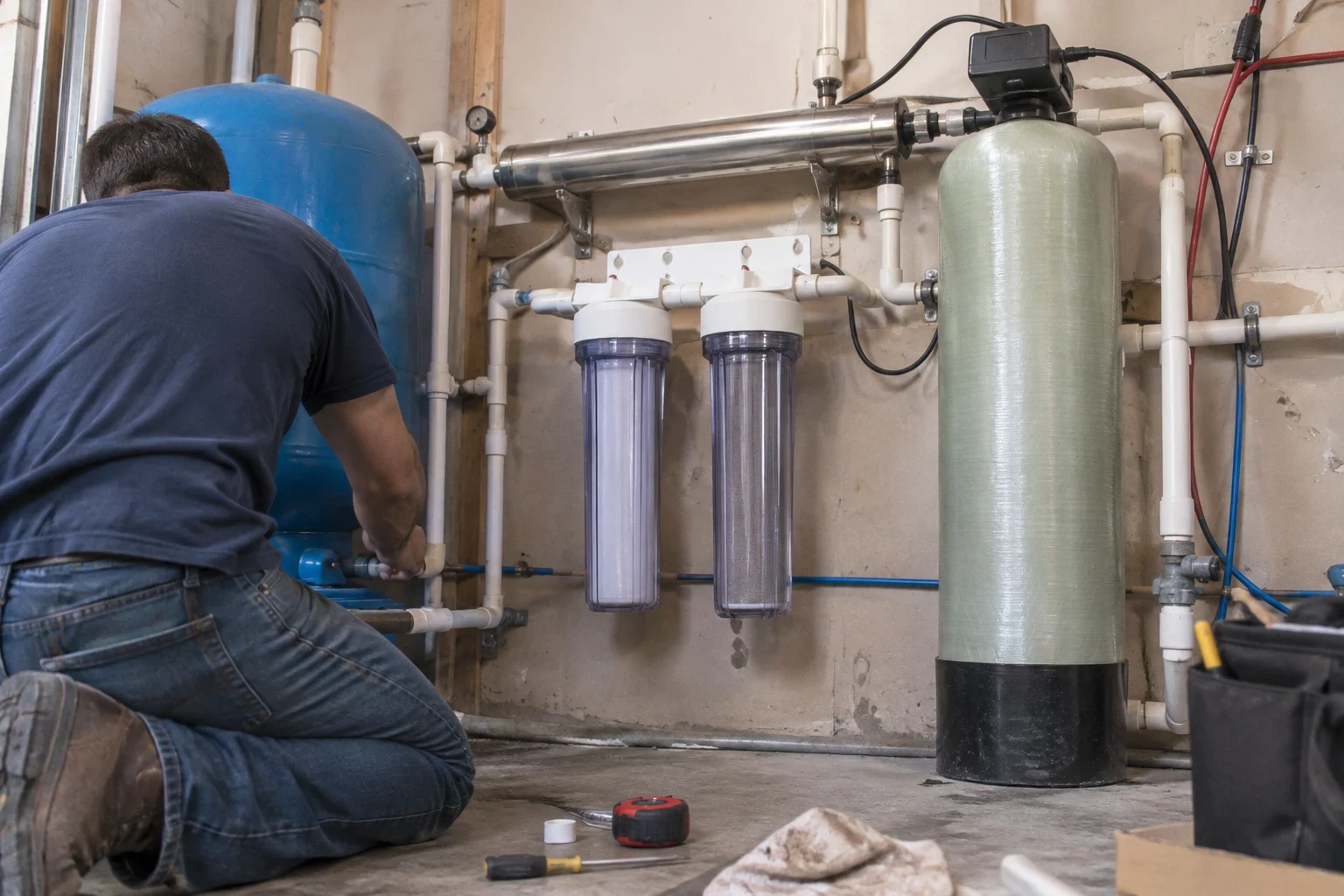
Treatment built around your well, not a catalog
On a private well, nothing cleans the water between the ground and your faucet unless you add it. Iron, manganese, hydrogen sulfide, sediment and bacteria are the usual troublemakers, and they often turn up together. A single filter rarely handles all of them, and the wrong one can clog within a few months.
That is why we begin with a lab test and design from the numbers. Stage order matters. Sediment is pulled out first so it cannot foul the media downstream, iron and sulfur are handled next, hardness follows if your test calls for it, and UV disinfection sits at the end, where the water is clear enough for the light to work.
A Certified Water Specialist through the Water Quality Association leads our work, and you can see that training in the small choices: where the valves sit, how the drain line runs, what backwash rate is set. Those details decide whether a system hums along for years or needs a visit every season.
What your well treatment includes
A lab test before any recommendation
We check for bacteria, iron, manganese, hydrogen sulfide, hardness and pH. You see the numbers and what each one means for your home.
Pump flow check
Backwashing filters need a minimum flow to clean themselves. We measure what your well pump and pressure tank actually deliver, then choose equipment that can backwash properly on that flow.
Stages in the right order
Sediment, iron and sulfur treatment, softening if your test calls for it, and UV disinfection. Each stage protects the one after it.
A bypass valve and unions
You can shut off treatment and keep water flowing during service, and any part can be swapped without cutting pipe.
A proper drain with an air gap
Backwash water goes to drain through an air gap so nothing can siphon back into your supply. It is a small fitting that many installs skip.
Sample ports and a clean finish
We add a port so the treated water can be retested easily, label the valves, protect your floors while we work and clean up before we leave.
Signs your well water needs treatment
Orange or rust stains
Reddish rings in toilets, tubs and laundry point to dissolved iron. It also builds up inside fixtures and water heaters over time.
A rotten egg smell
That odor is hydrogen sulfide. It is often stronger in hot water and can tarnish silver and fixtures.
Black specks or dark stains
Usually manganese. Even small amounts can stain and leave a bitter taste.
Cloudy or gritty water
Sand and silt wear out faucet cartridges and appliance valves. A sediment stage is usually the first fix.
No recent bacteria test
Bacteria have no taste or smell. If your well has not been tested in a while, or after heavy flooding, testing is the only way to know.
How a well water job runs
- 1
A phone conversation
You describe what you have noticed and share a little about your well and plumbing. We explain what the testing involves and what comes next.
- 2
Testing and a written plan
We take a sample and review the results with you. You then get a written, line-item plan that shows each stage and the reason for it, with nothing your water does not need.
- 3
Installation day
We shut off the water, mount the equipment by the pressure tank, plumb in the bypass, drain line and sample port, and set backwash timing to match your pump. Most homes are without water for only part of the day.
- 4
Startup and walkthrough
We flush and test the system, then show you the bypass, what to keep an eye on and when filters or the UV lamp will need attention.
- 5
Care after the sale
Our full services after the sale cover media changes, UV lamp replacements and retesting. As your well changes over the years, the same people who installed the system are a phone call away.
What shapes the cost
Your price comes down to what the lab test turns up and how your home is plumbed. Before any work begins, we go over each line with you by phone and put it in writing. Free installation is included on our systems.
- What your water carries
- Sediment on its own is a simple fix. Iron, sulfur and bacteria together call for more stages and more equipment.
- Your well's flow rate
- A low-flow pump may need a different filter type or a larger tank so it can backwash properly.
- How much water your household uses
- More bathrooms and more people mean bigger tanks and higher-flow valves to keep pressure steady.
- Where the equipment goes
- Tight spaces, outdoor well houses or a long run to a drain change the materials and time involved.
Well water questions we hear often
Something not covered here? (281) 694-0589
Why test the water before choosing equipment?
Iron filters, sulfur treatment and UV each work in a different way, and a guess often ends with equipment that clogs or misses the real problem. The test tells us what is in your water and in what amounts. That way you only pay for the stages your well actually needs.
Will a treatment system make my showers weaker?
It shouldn't, as long as the equipment fits your plumbing and your pump. When we do see weak flow after an install, it usually traces back to valves that are too small or a sediment cartridge left in too long. We size valves and fittings to the pipe already in your home, and we show you how to spot a cartridge that is ready to be changed.
Can you get rid of the rotten egg smell?
Most of the time, yes. The right fix depends on how much hydrogen sulfide is present and whether iron is in the water too. If the odor only appears in hot water, your water heater may be involved, and we will tell you so plainly.
Does a UV system replace shocking my well?
Not quite. UV disinfects water as it flows through, but it needs clear water and a lamp replaced on schedule. Shocking treats the well itself. Plenty of homeowners do both, and we can explain how the two work together for your setup.
How much upkeep does a well system need?
Backwashing filters largely clean themselves. Sediment cartridges get swapped, UV lamps get replaced on a set schedule and the water should be retested from time to time. We lay out the equipment so each of these is a quick job, and we are glad to take care of them for you.
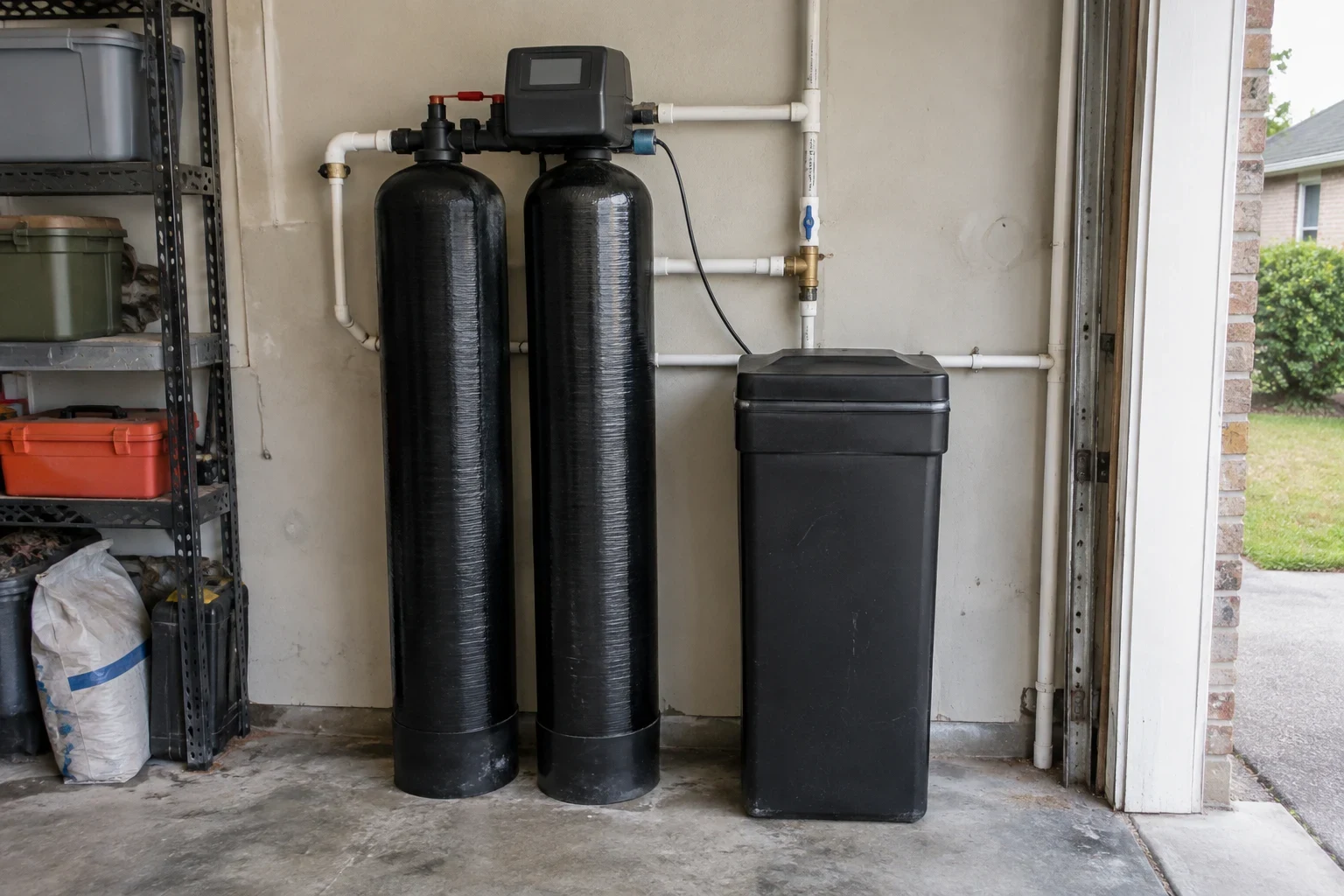
Ready for well water you never have to think about
Give us a call and describe what is showing up in your sinks, your laundry or your glass. We will explain how testing works and what treatment could look like for your well. We help well owners in Friendswood and nearby towns like Alvin and Manvel.